The future is here.
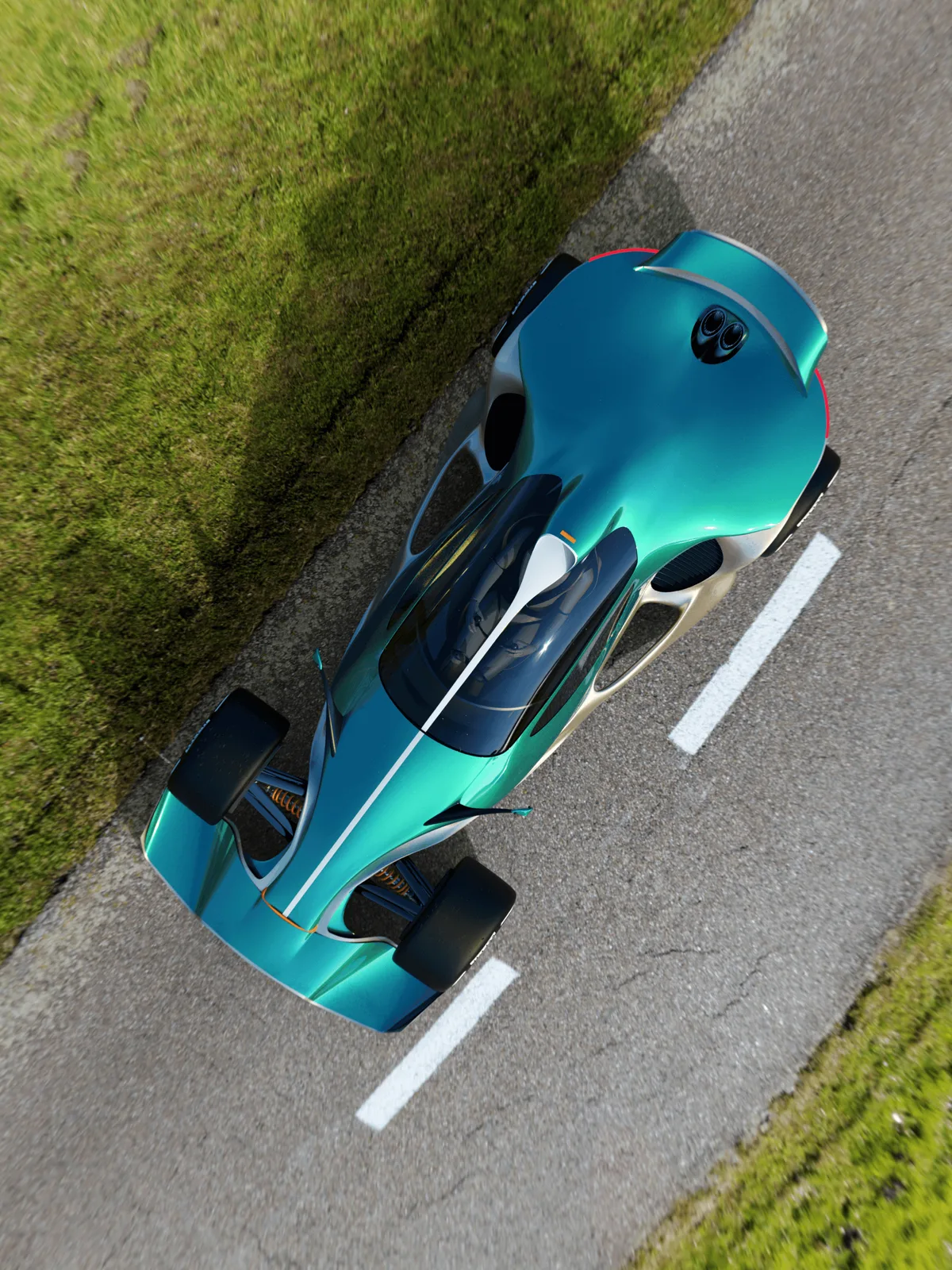
Formula f. Sculpted at full scale in VR and built around the driver.
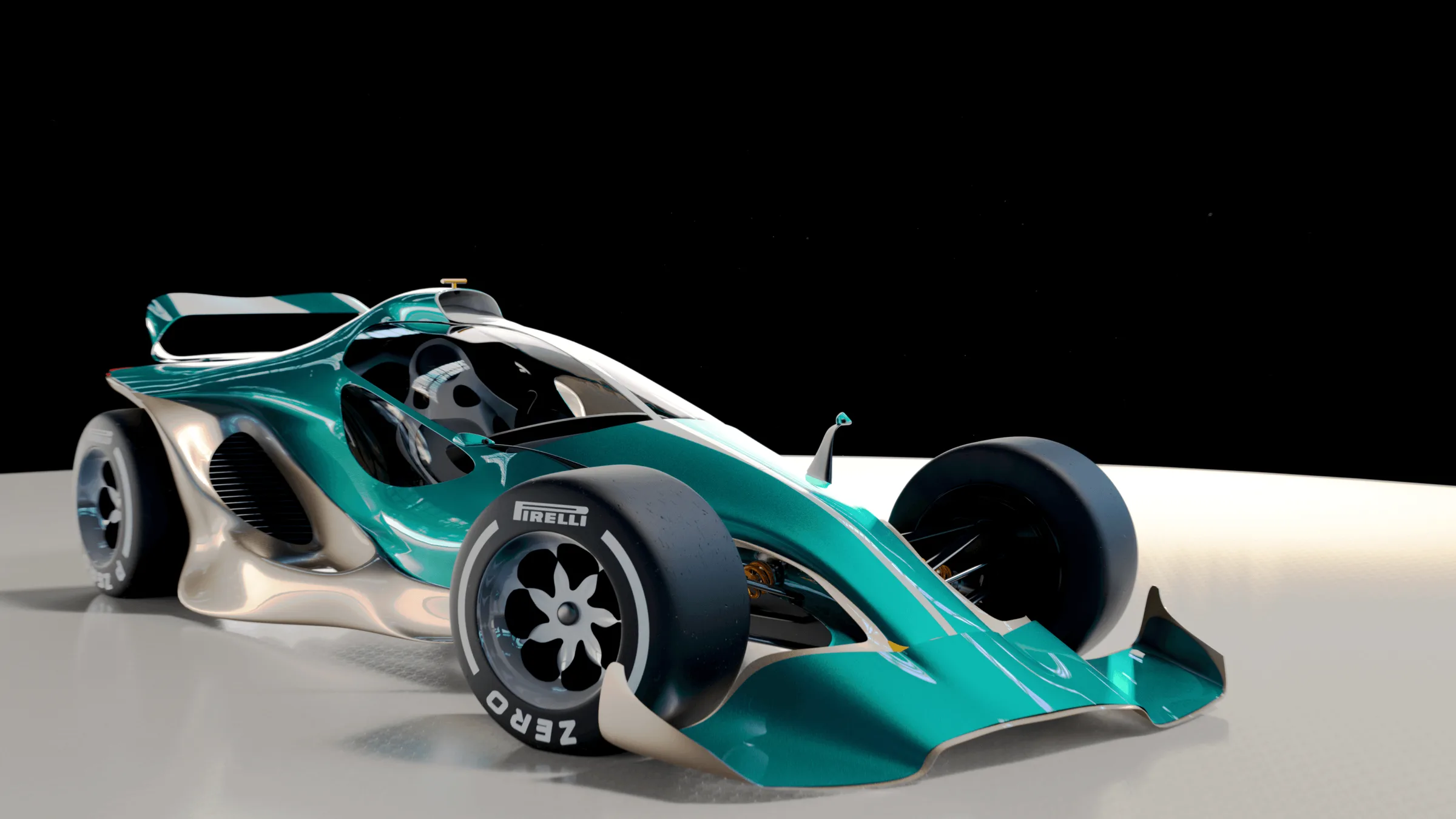
How does designing inside VR, at full scale, change the way a car is shaped?
Gravity Sketch is excellent at quick, complex geometry; Rhino excels at perfect geometry. Neither could carry the car alone.
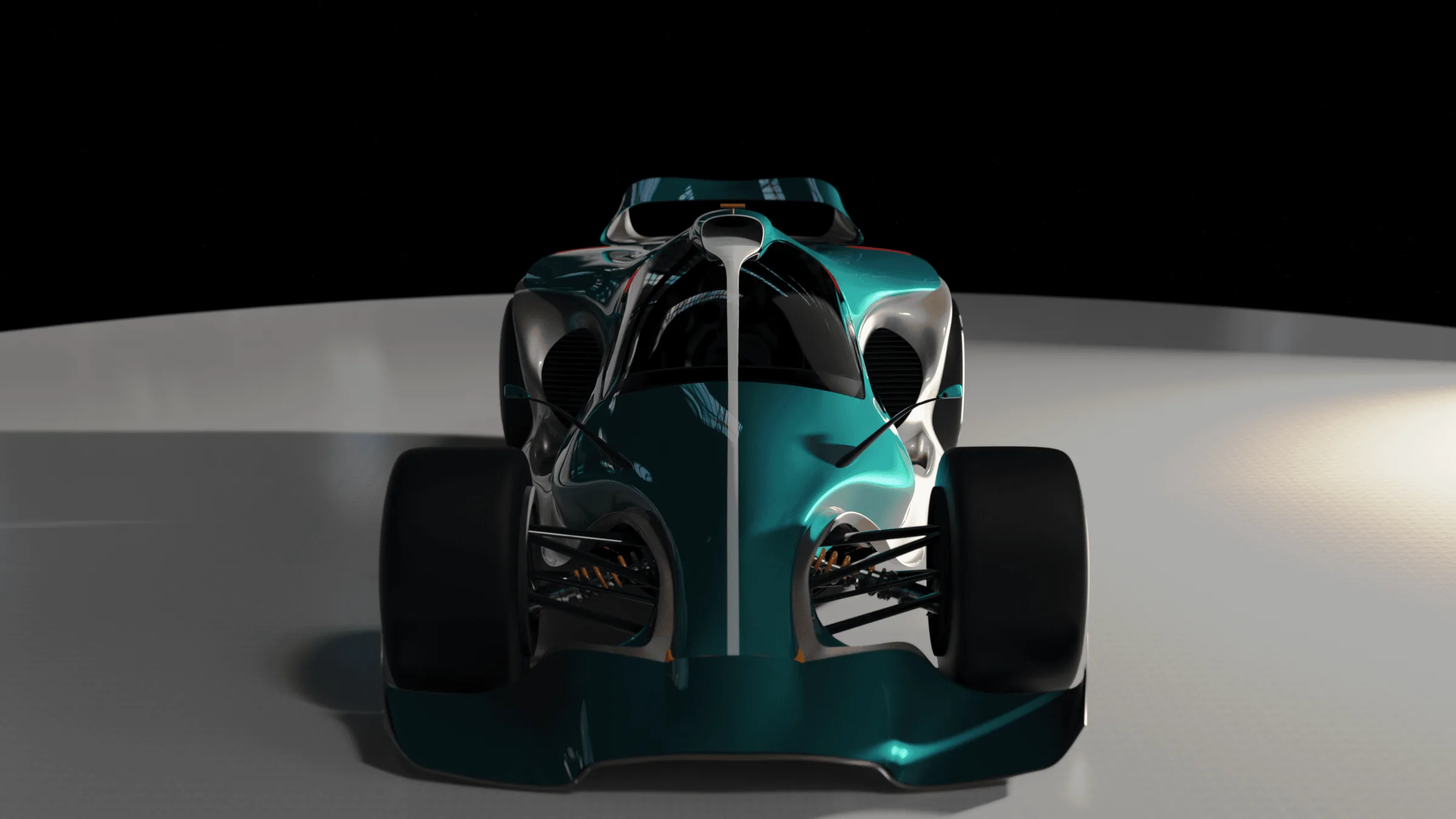
A race car shaped at full scale in Gravity Sketch, made precise in Rhino and rendered in KeyShot.
Three silhouettes each, then a downselect
This started as a team project with Yoshi Hose. We each designed three vehicle silhouettes in Gravity Sketch, compared all six side by side, and chose two to overlay and combine.
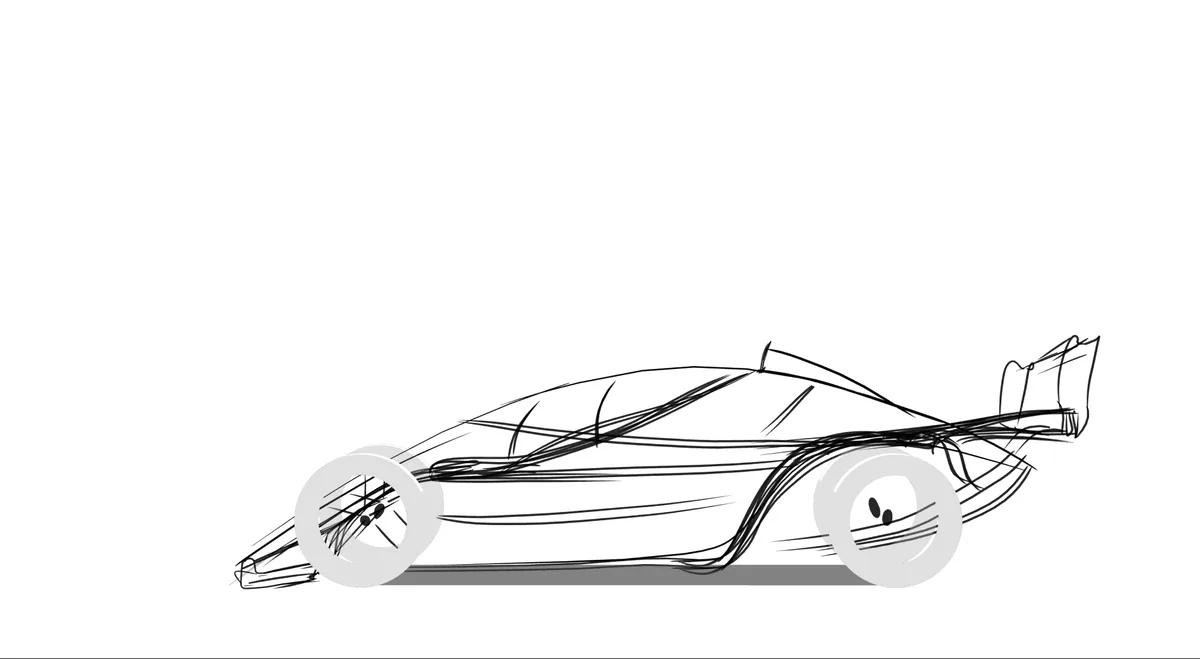
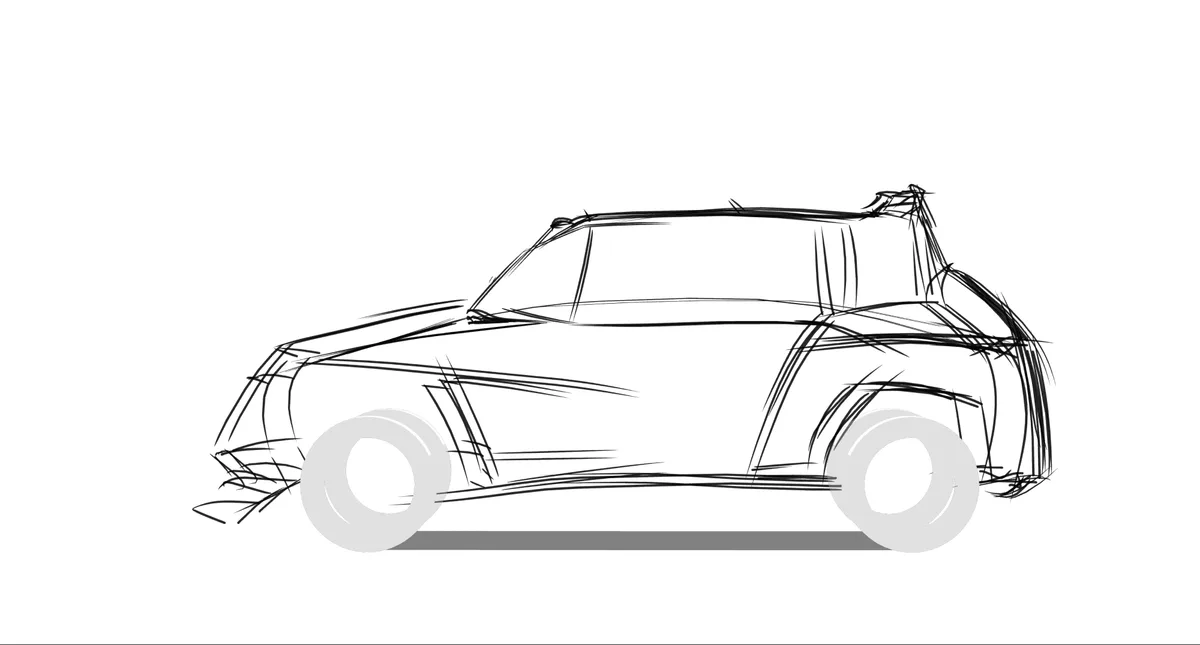
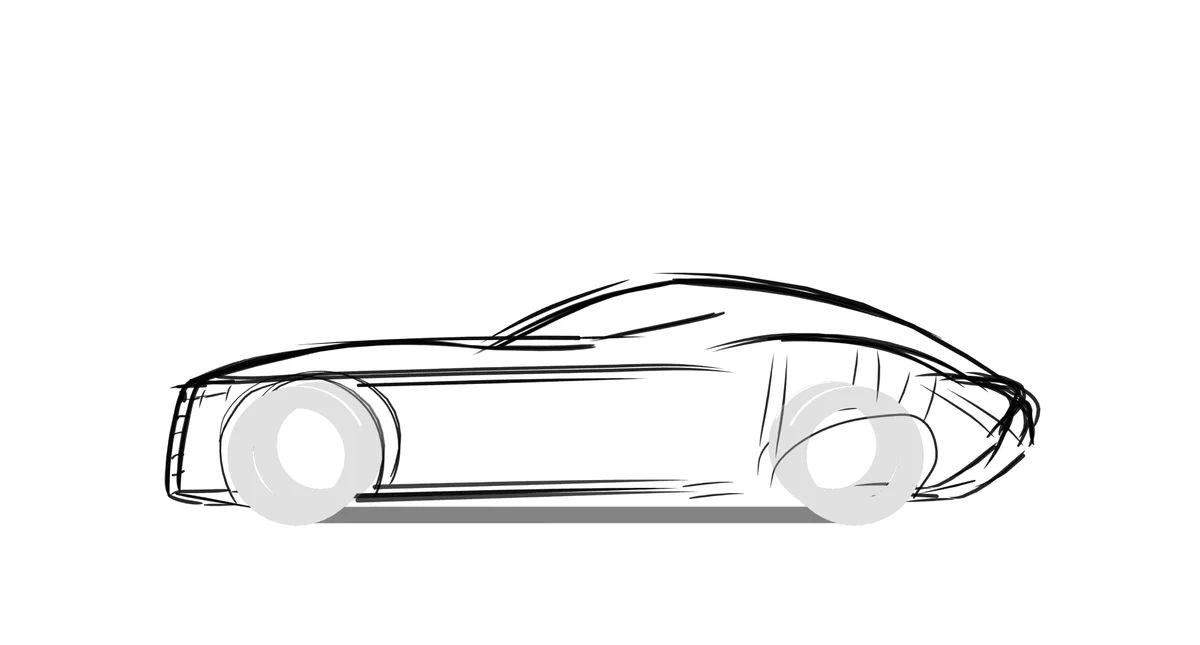
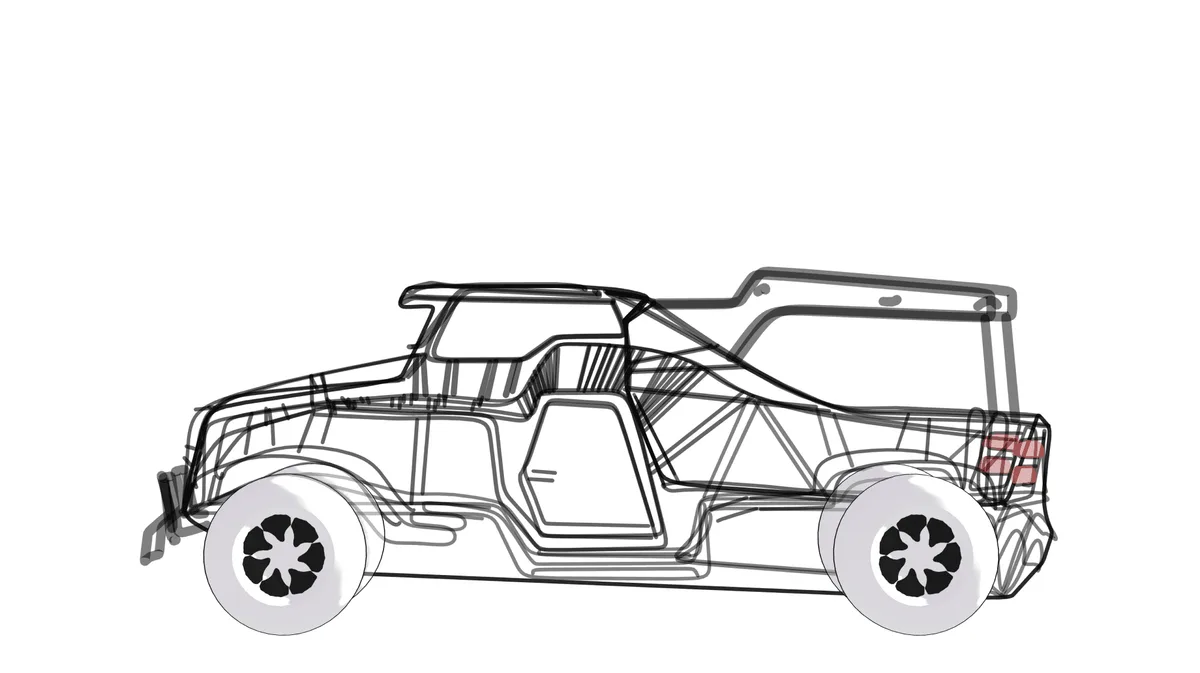
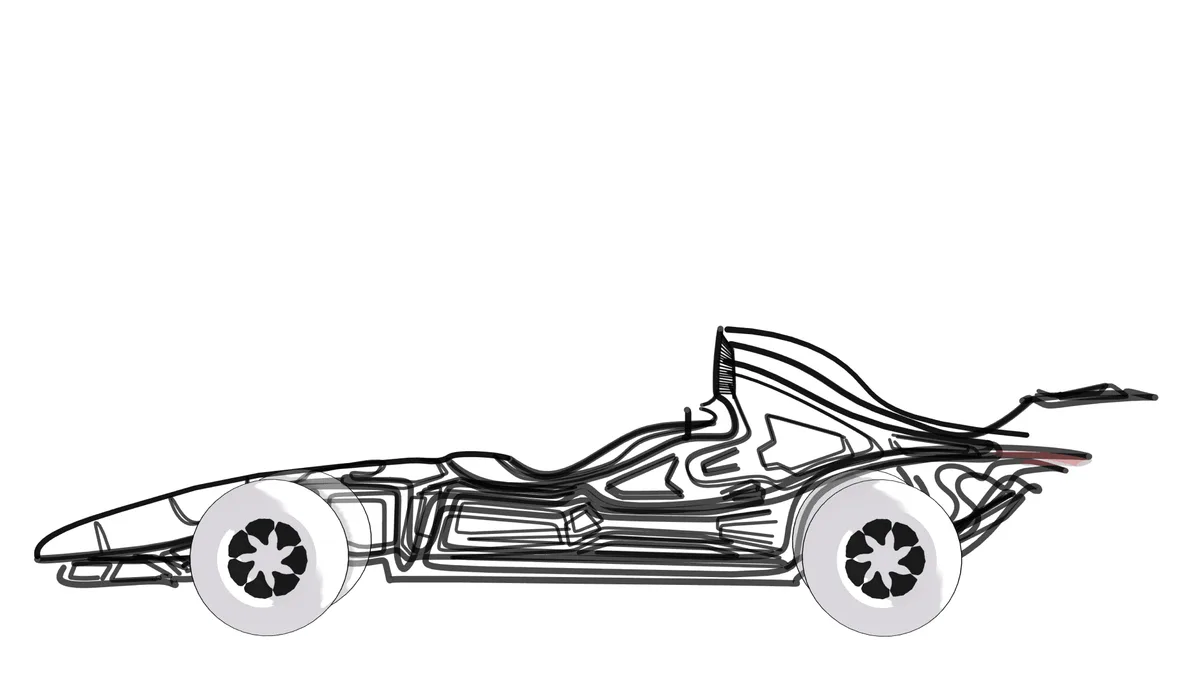
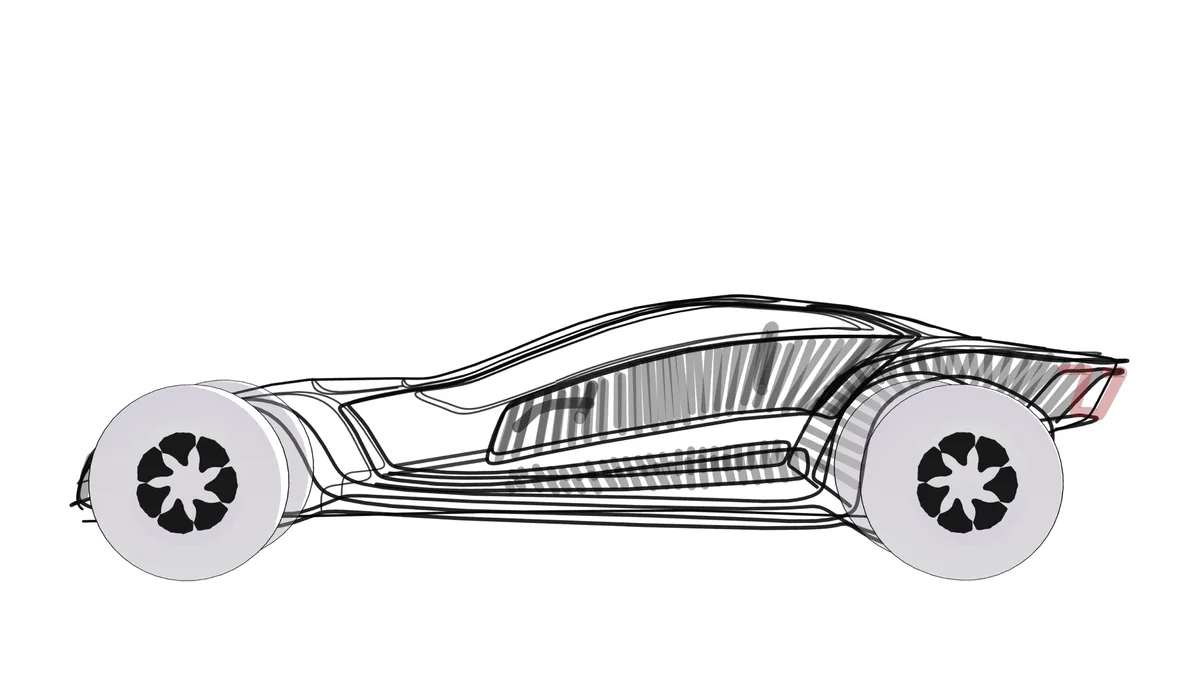
Combine two silhouettes instead of picking one
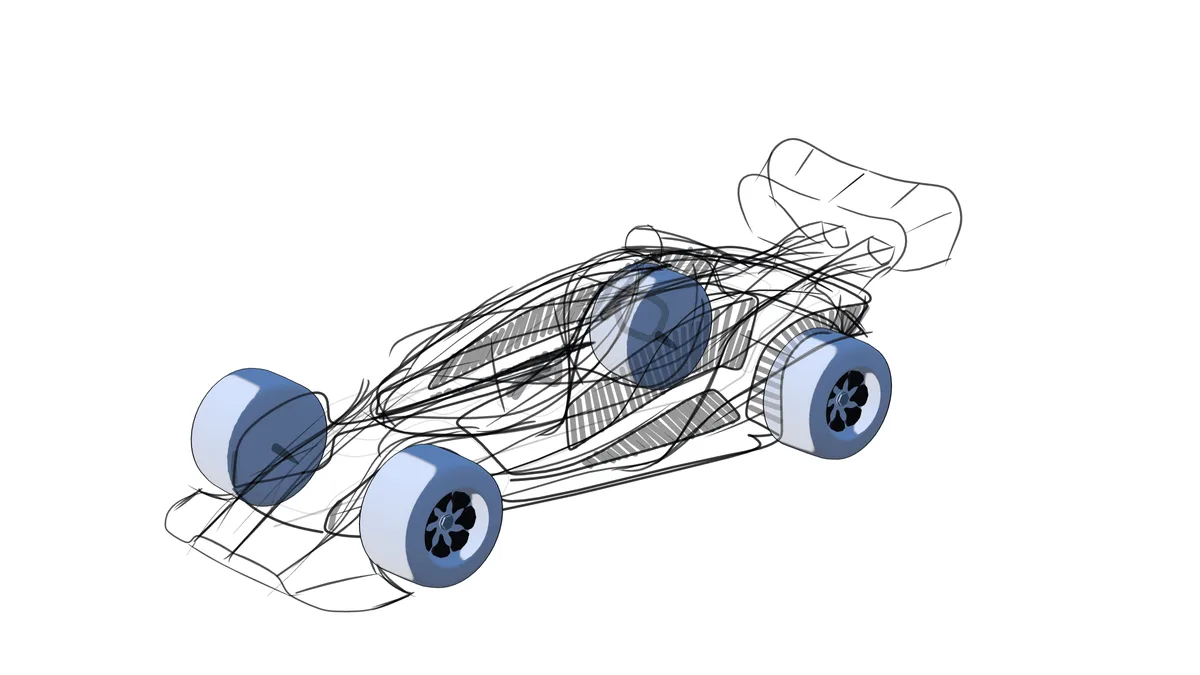
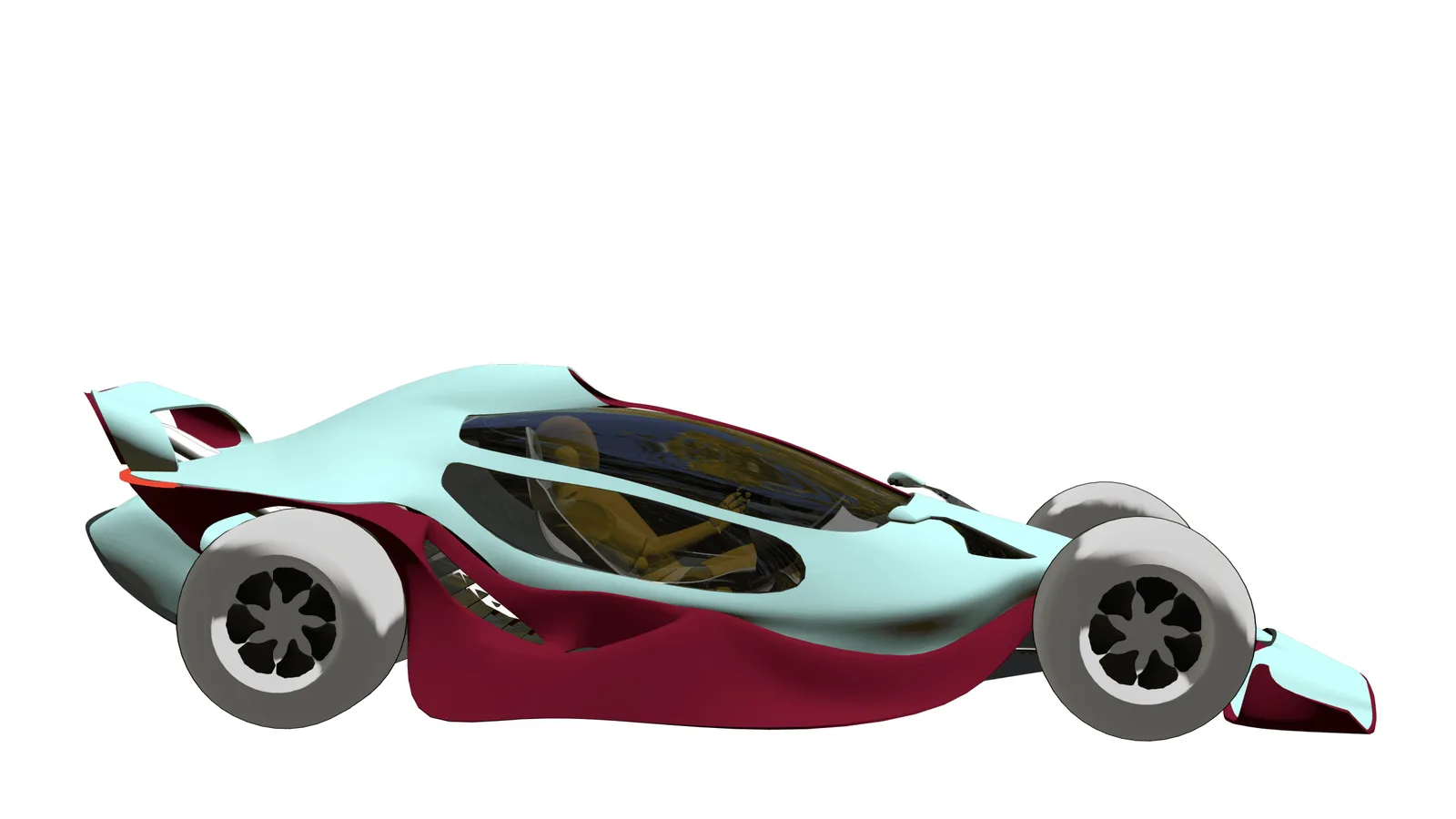
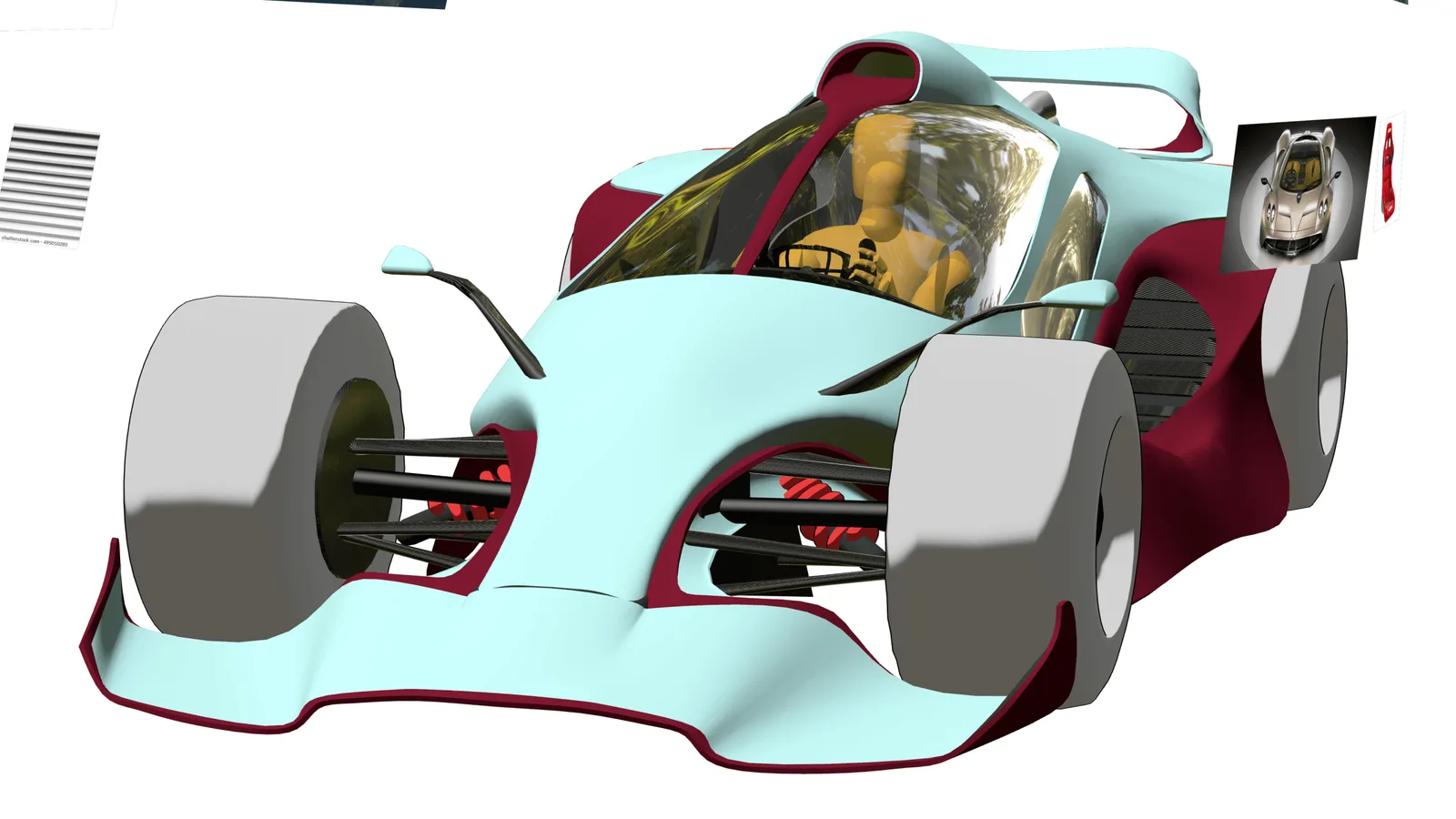
One silhouette would carry the concept forward.
[Which qualities from each silhouette were worth keeping?]
Overlay and combine two silhouettes, then begin surfacing from the merged form.
[What the merge cost in clarity or speed.]
Let full scale set the proportions
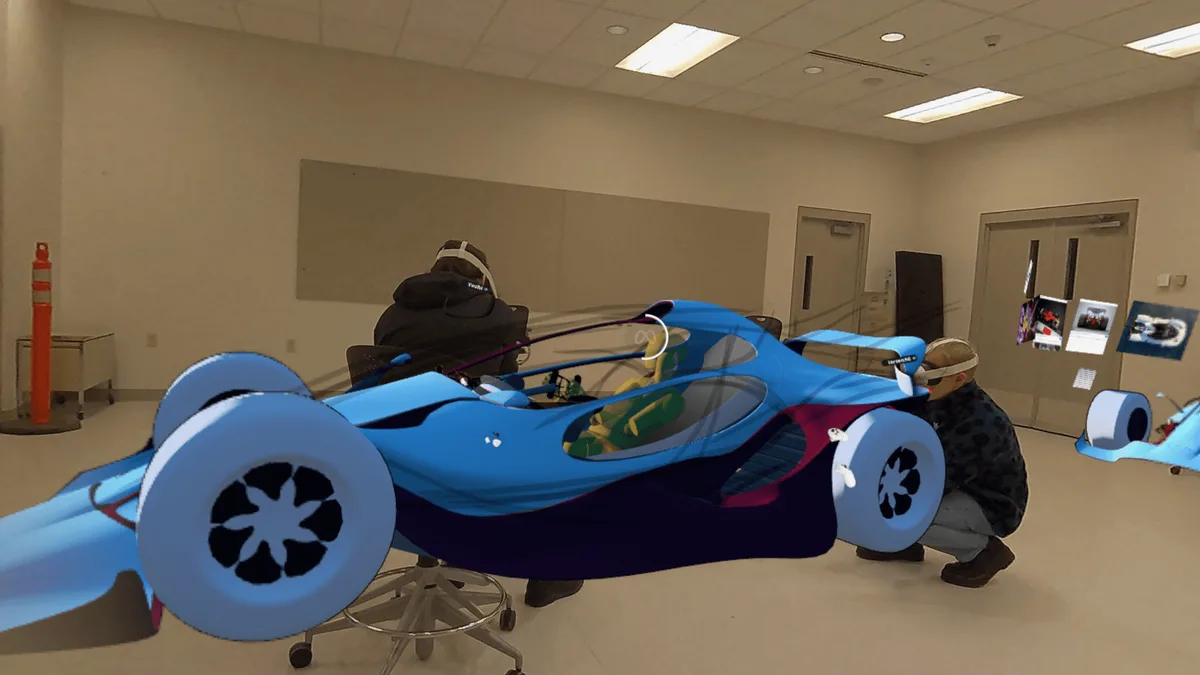
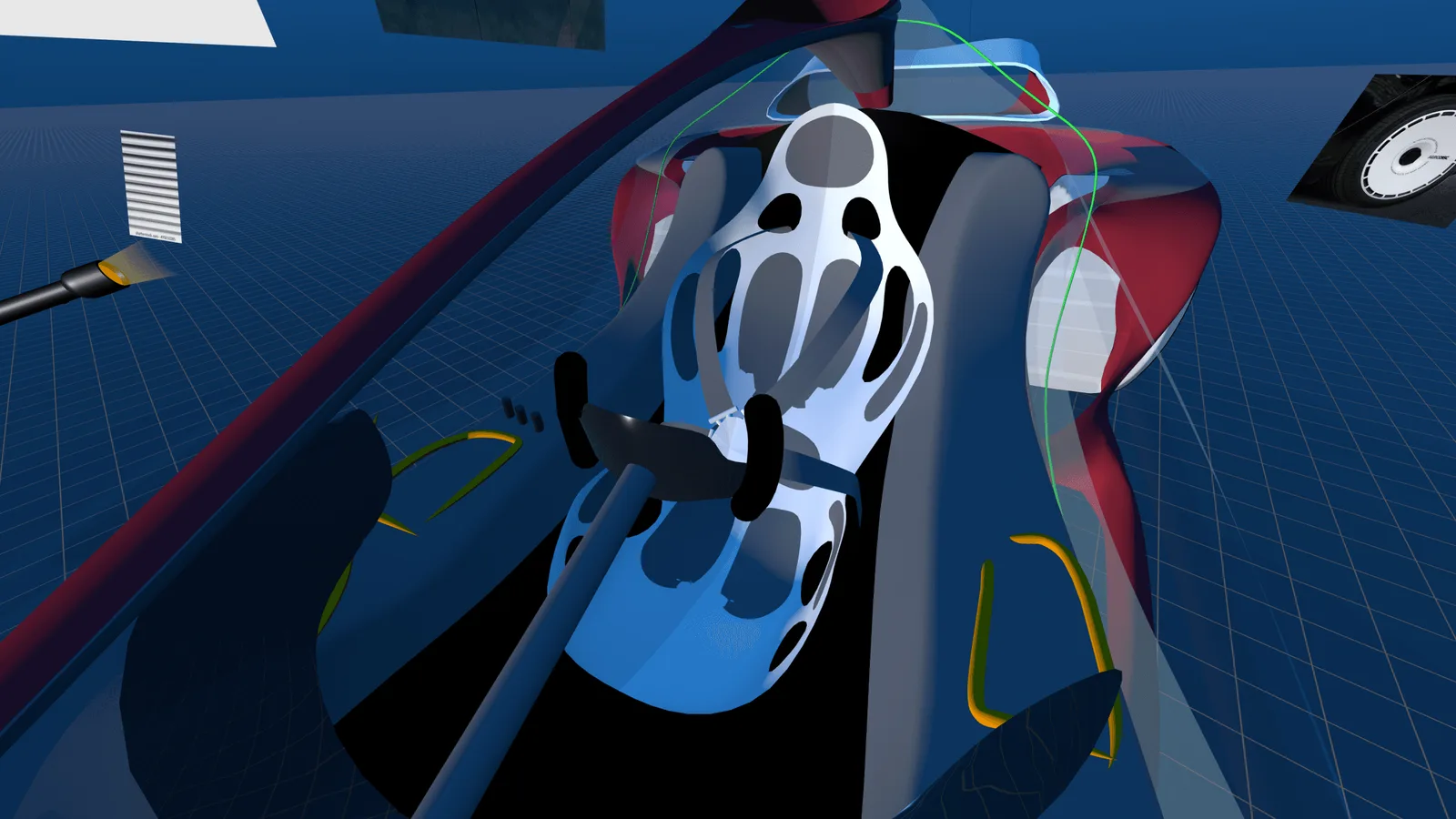
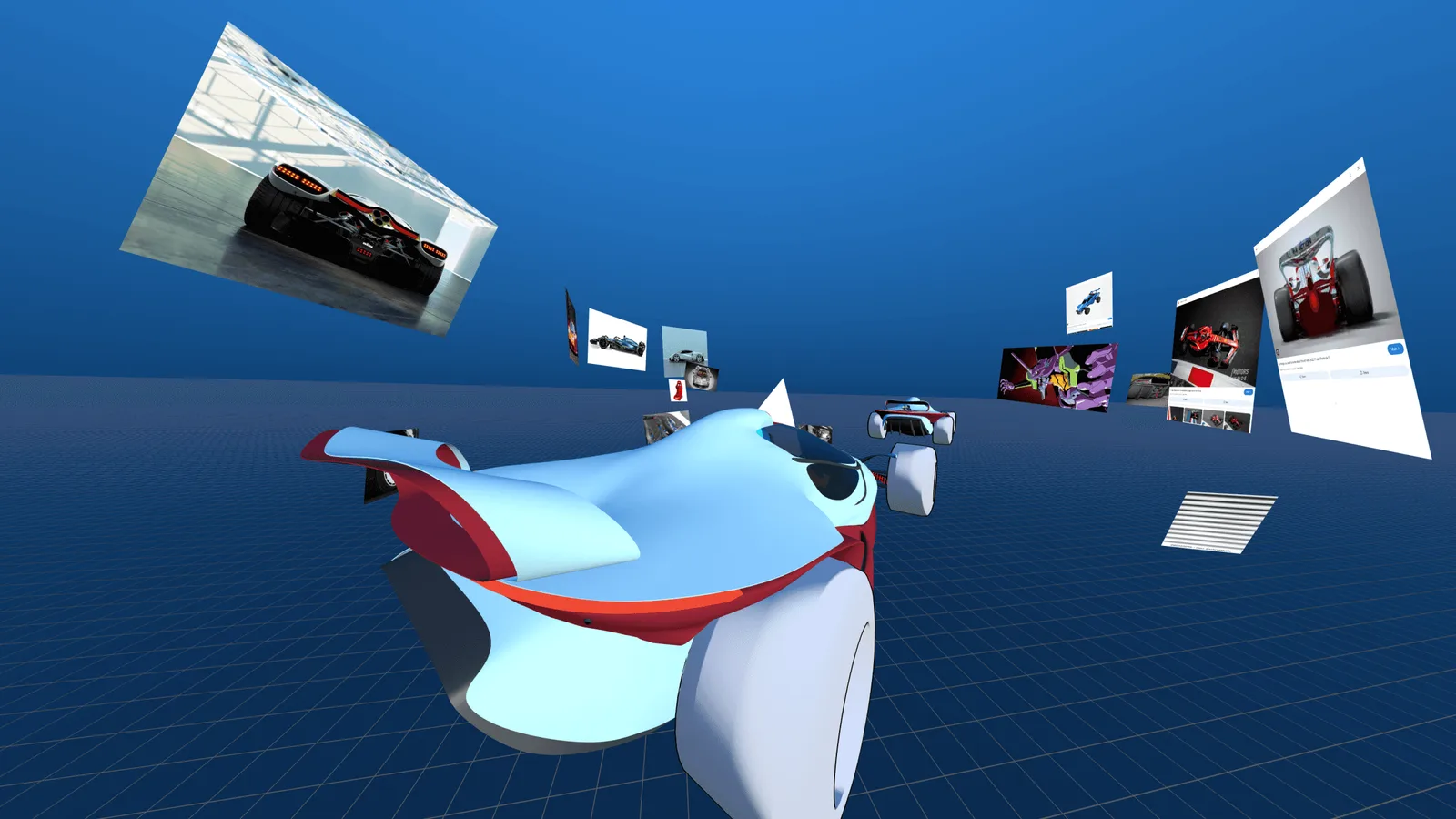
Proportion could be judged on screen.
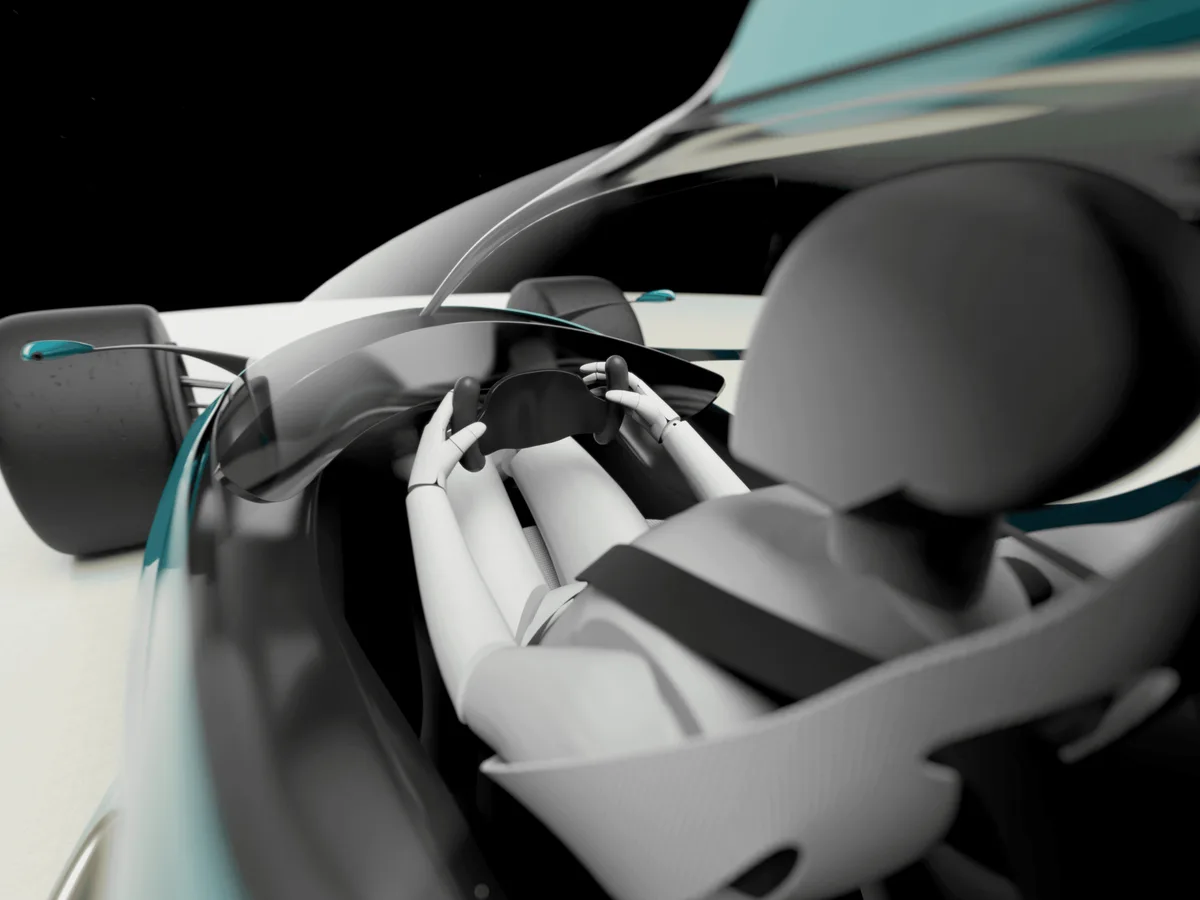
Standing next to the 1:1 model in VR exposed seating position and driver-visibility issues a screen hid.
Lock seating, visibility and overall proportion in VR before refining surfaces.
Surfaces sculpted in VR stay loose, so precise geometry had to wait for Rhino.
Refine line flow while the form is still fast to change
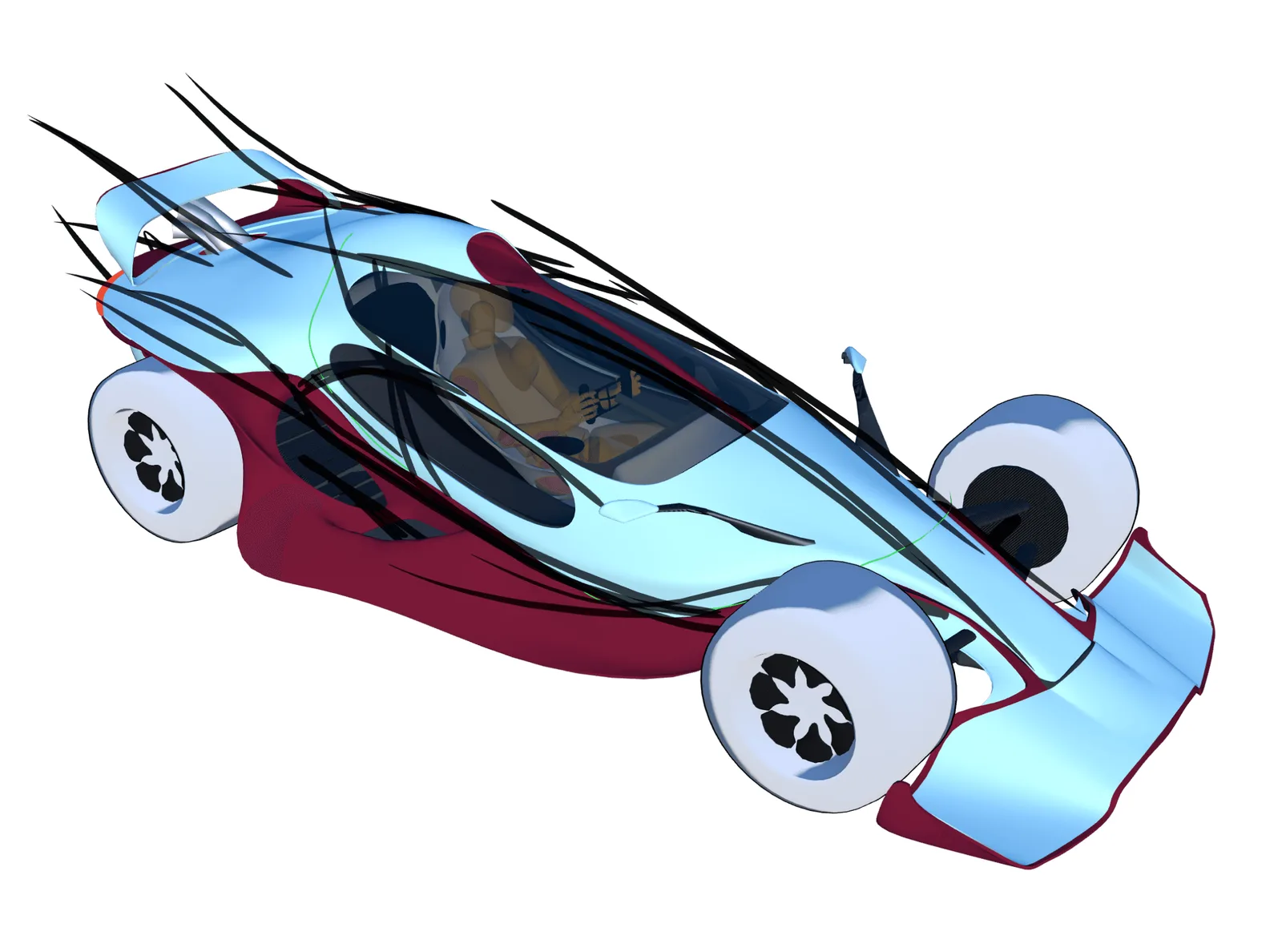
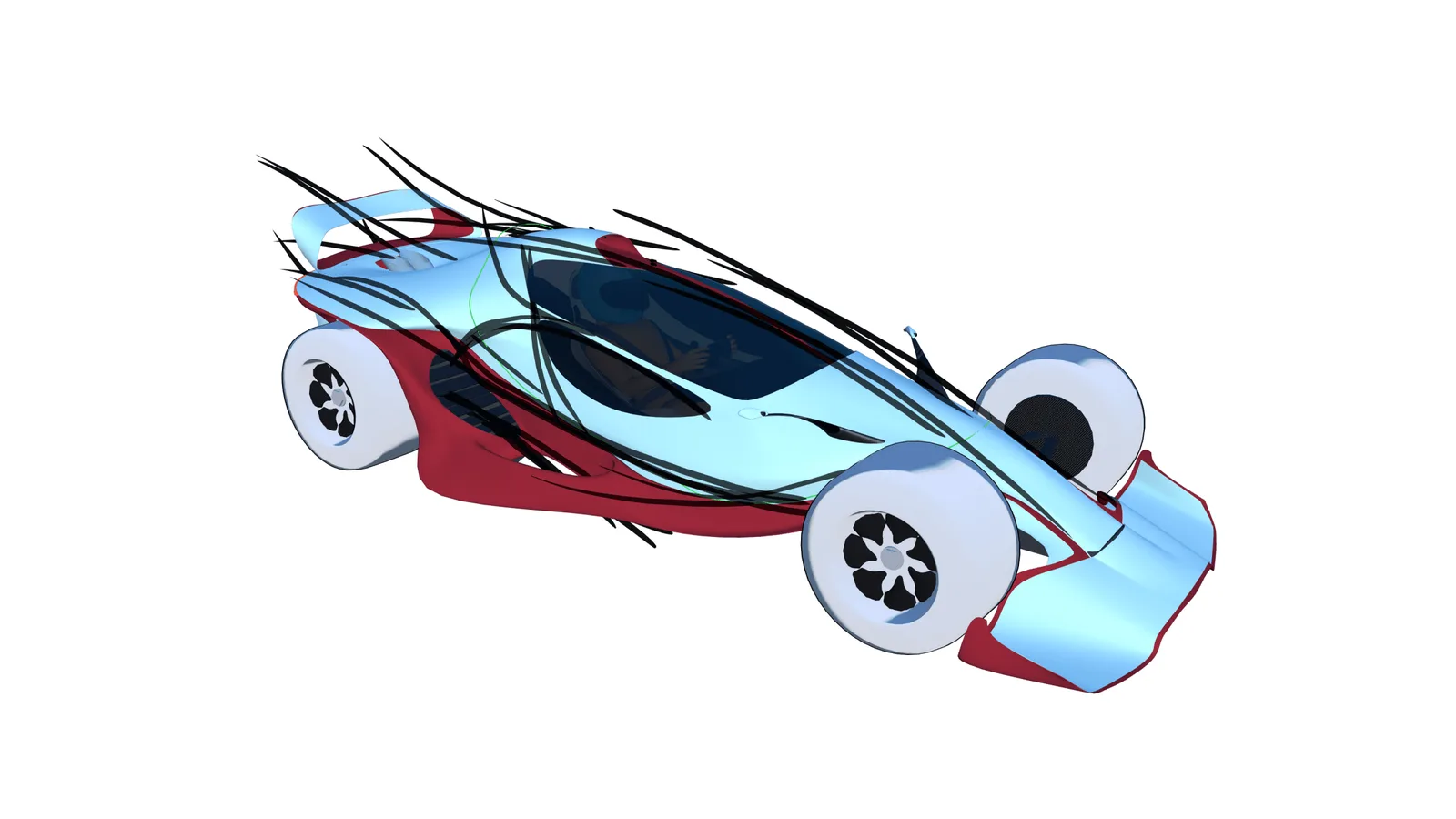
The team model was ready to render.
After the initial phase, proportion and line flow still needed work.
Continue solo in Gravity Sketch, refining proportion and line flow before committing to precise surfaces.
[What changed from the team version.]
Gravity Sketch for speed, Rhino for precision
Using the two in tandem was the key to this project. Gravity Sketch is excellent at quick, complex geometry: at full scale, we could sweep compound curves around the cockpit and wheels and judge them by eye, from the driver's seat. Rhino excels at perfect geometry: exact cylinders, even patterns, clean edges and crease-free surfaces. The form stayed loose and fast in VR while it was still changing, and became precise in Rhino once it had settled.
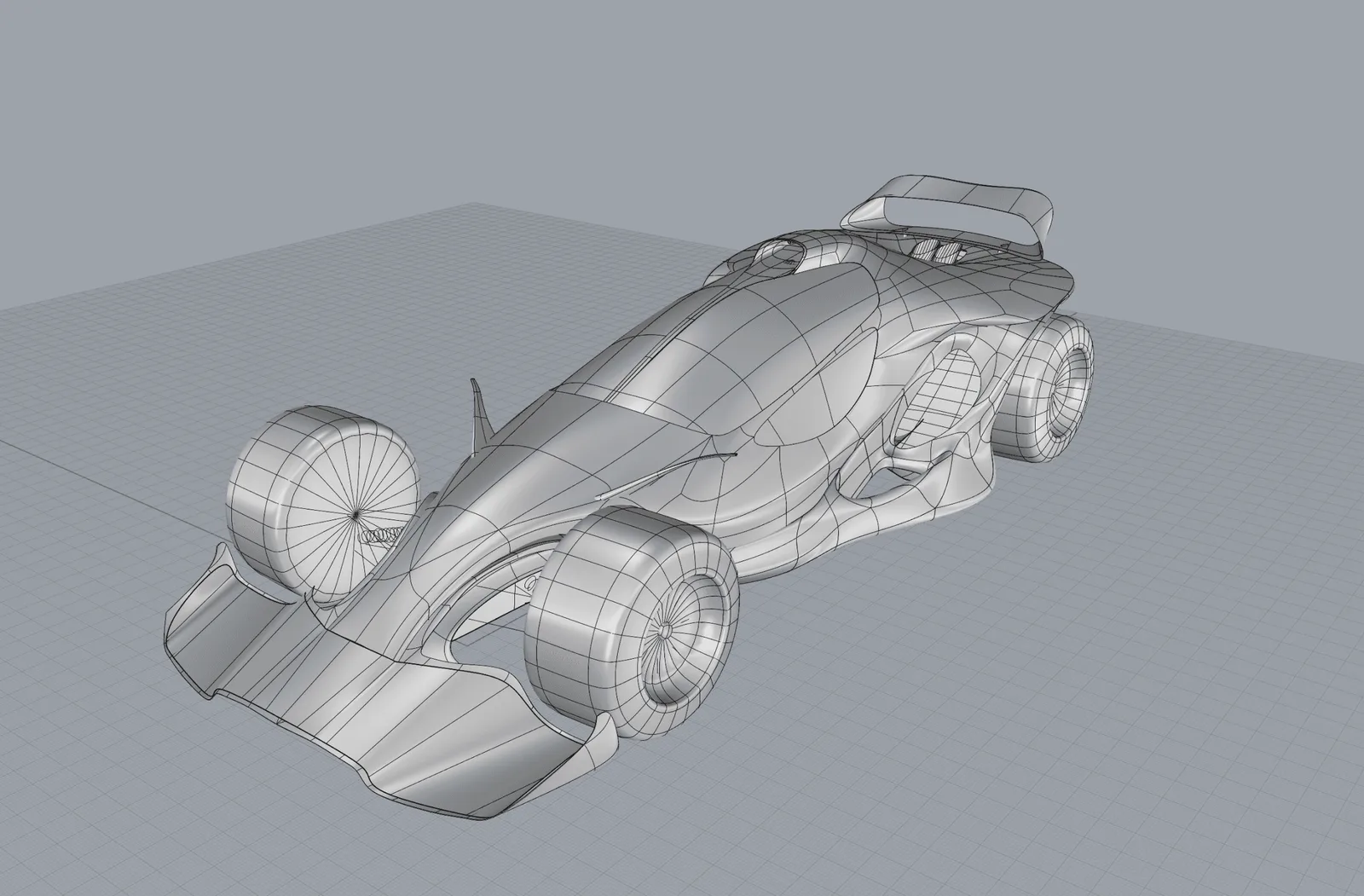
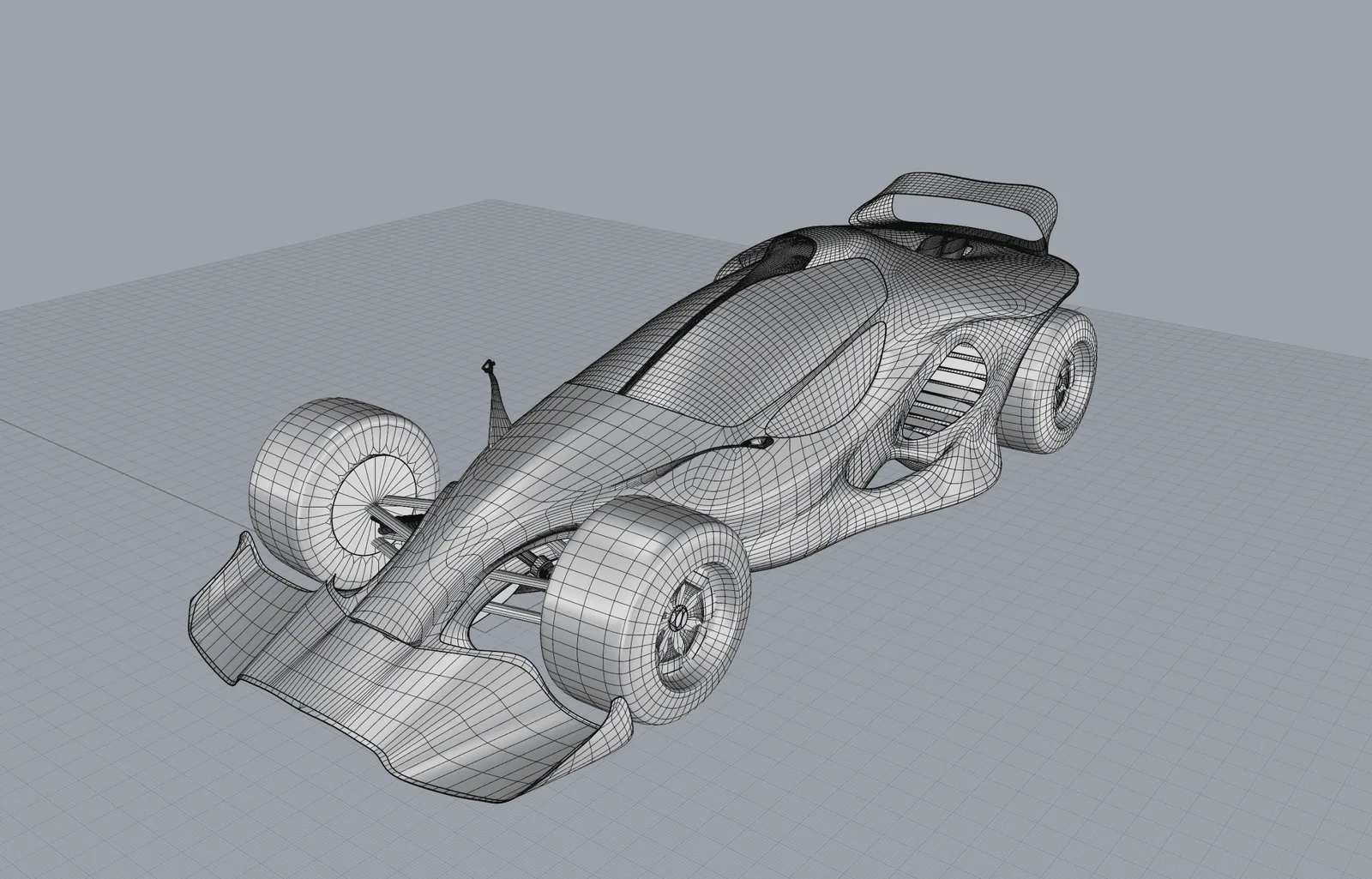
Rebuild the details as exact geometry in Rhino
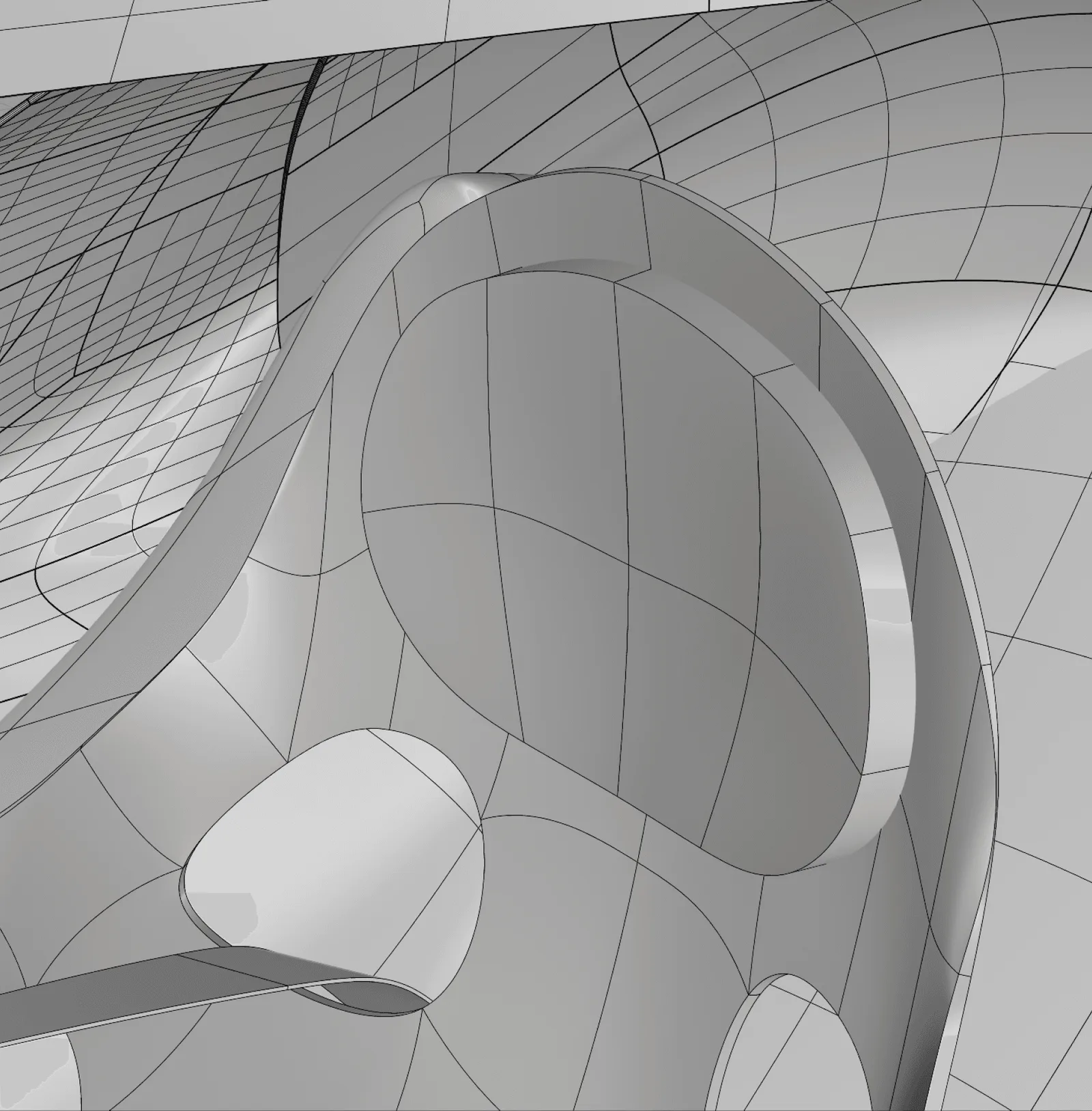
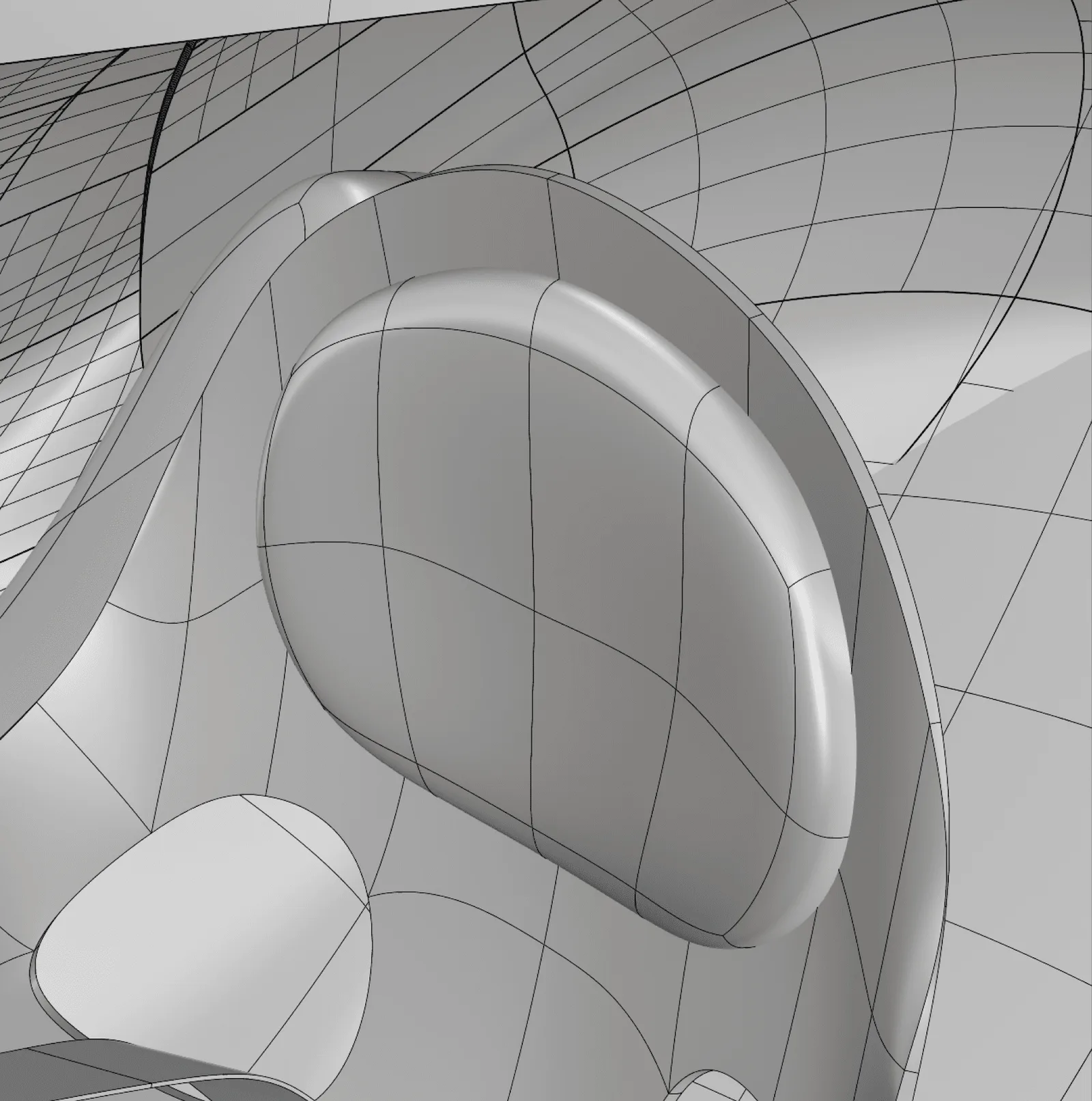
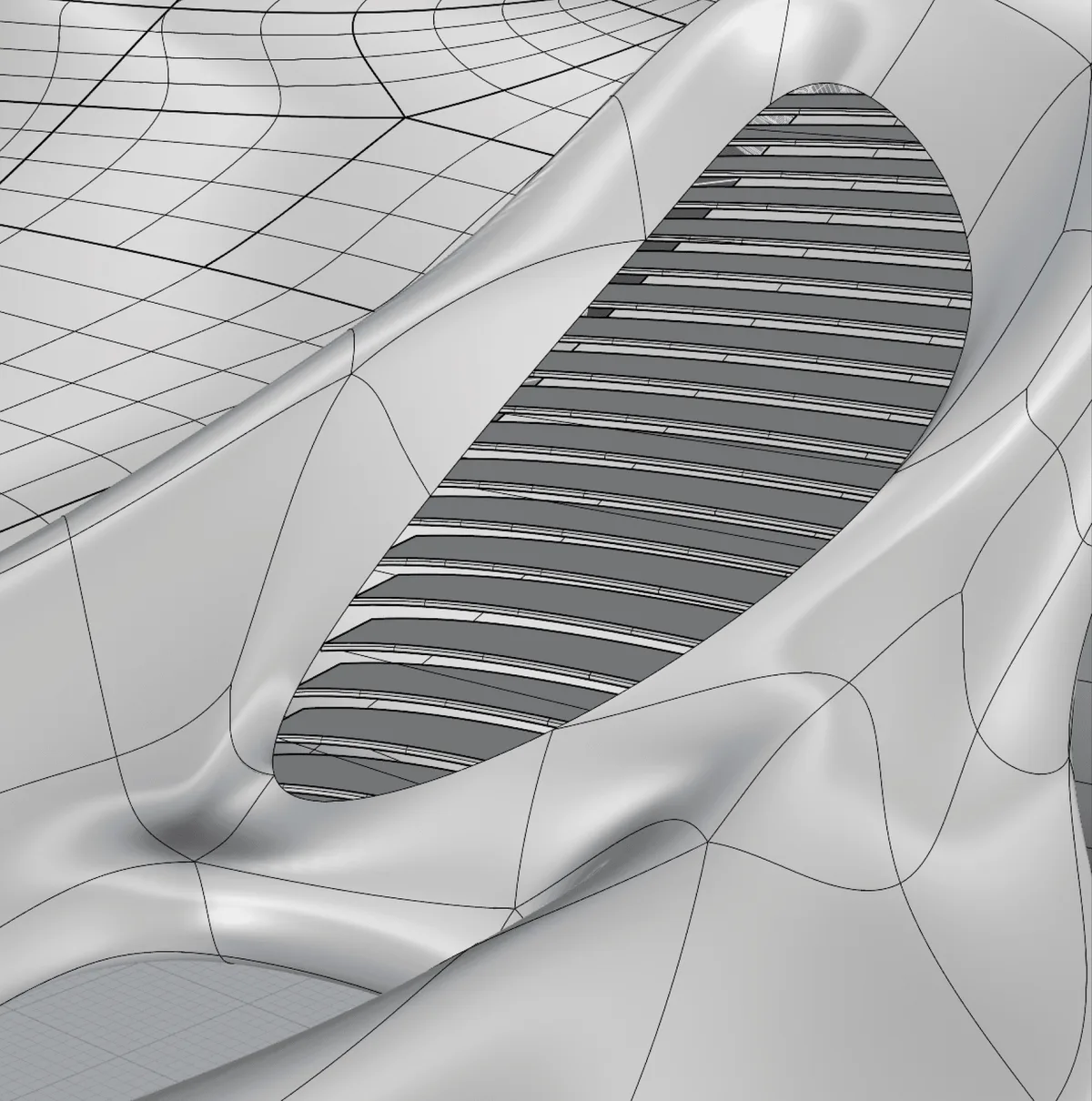
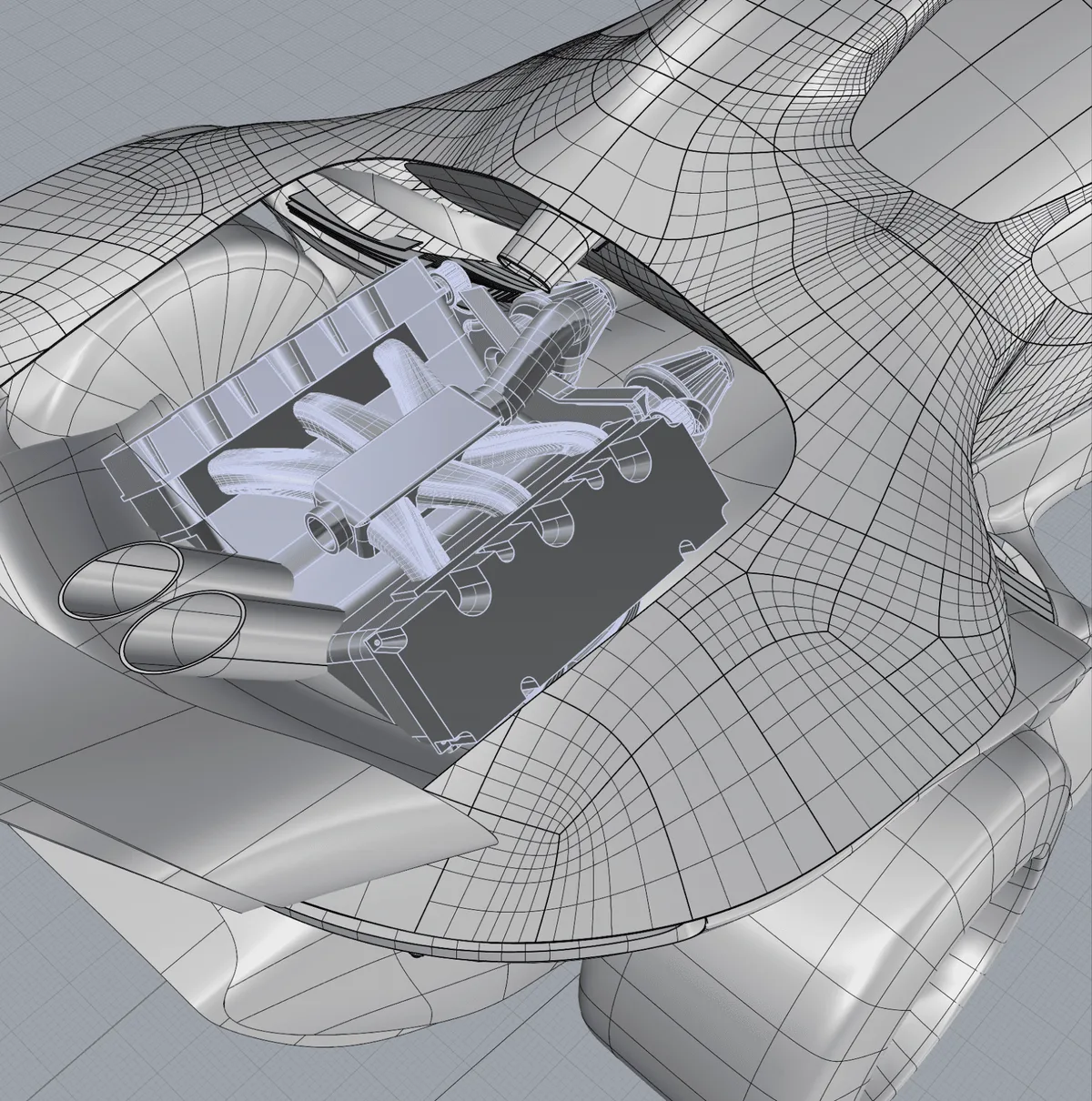
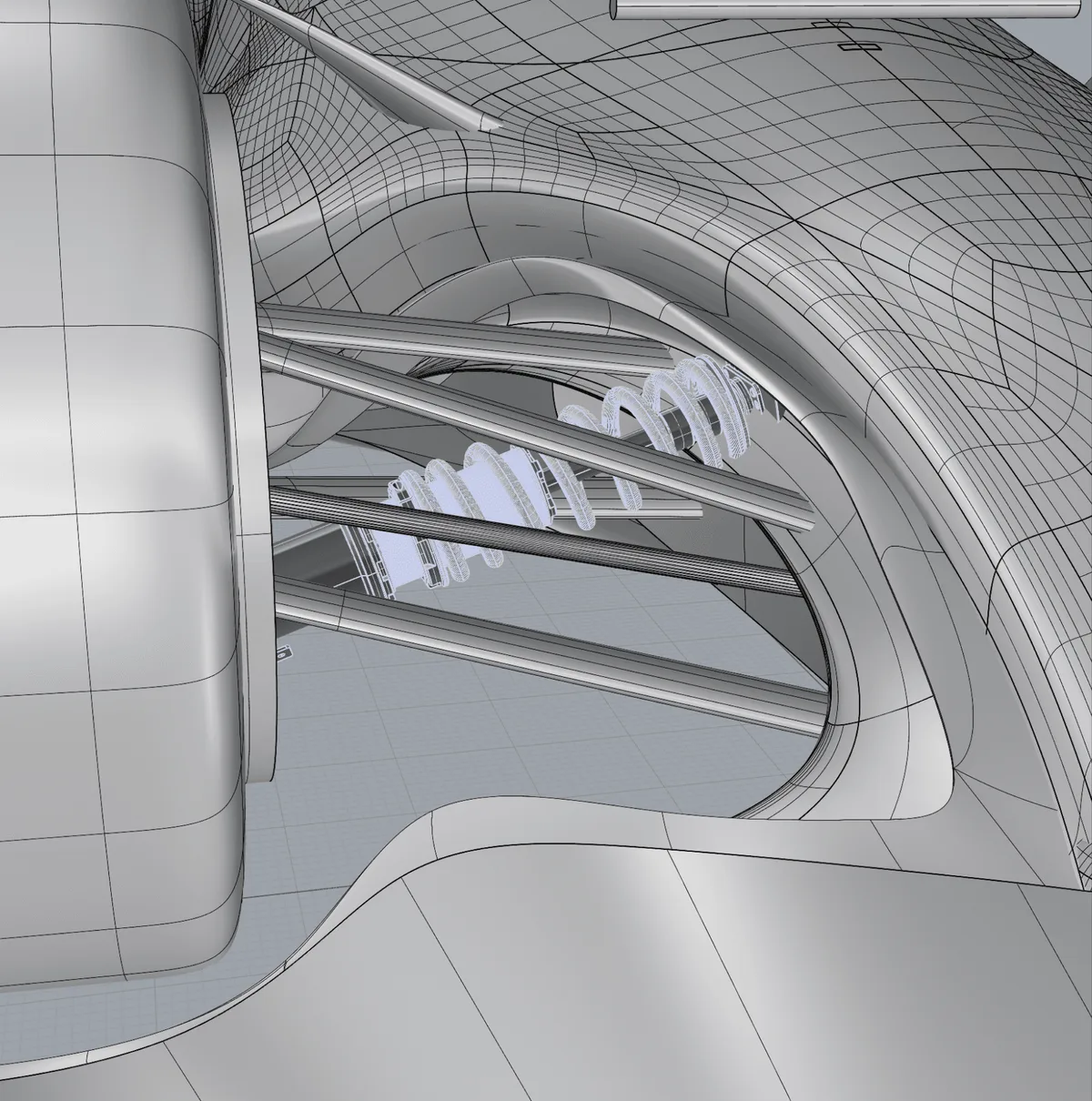
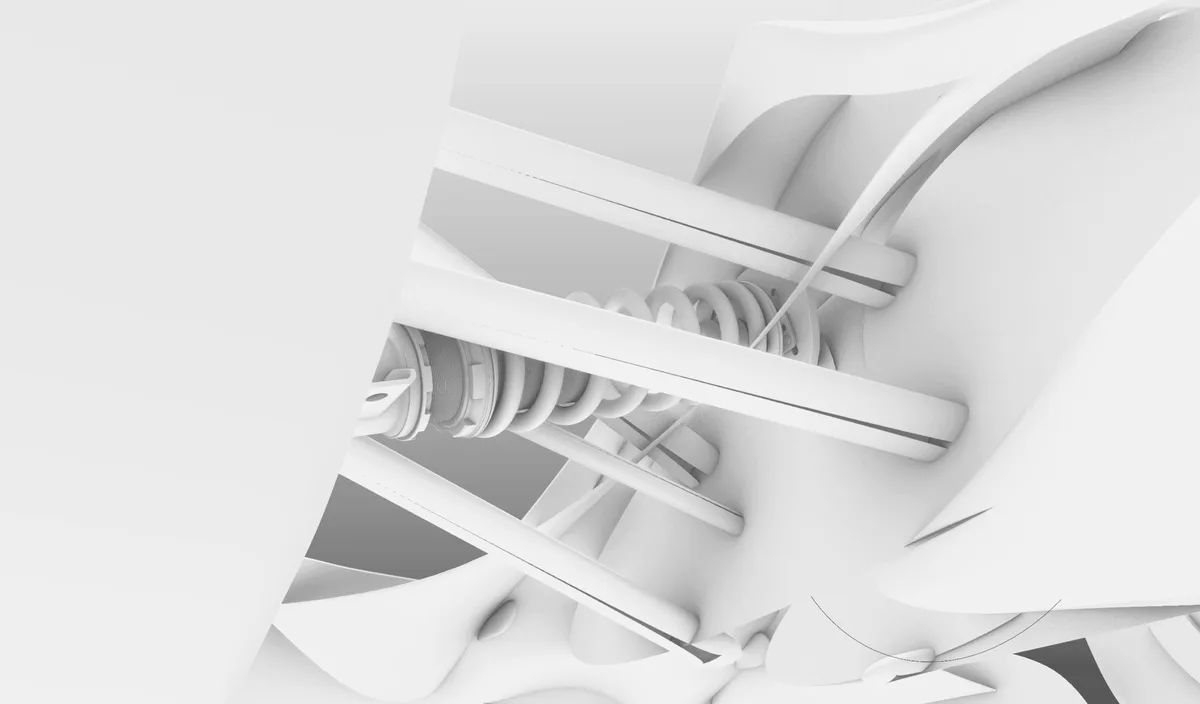
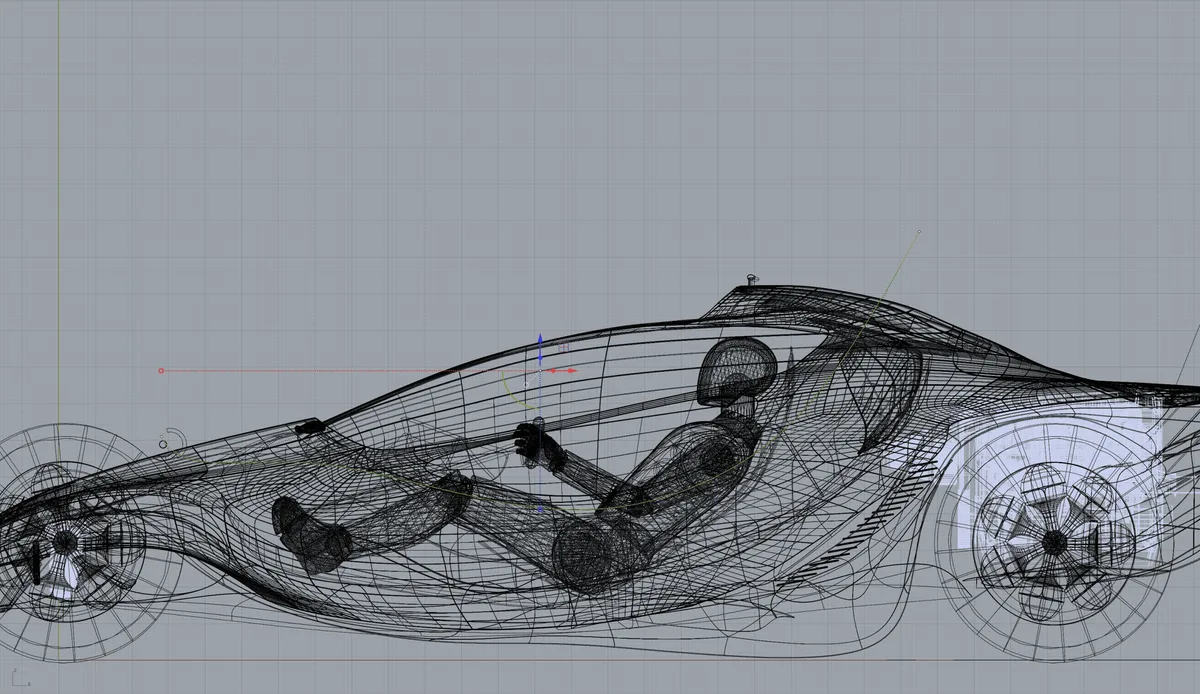
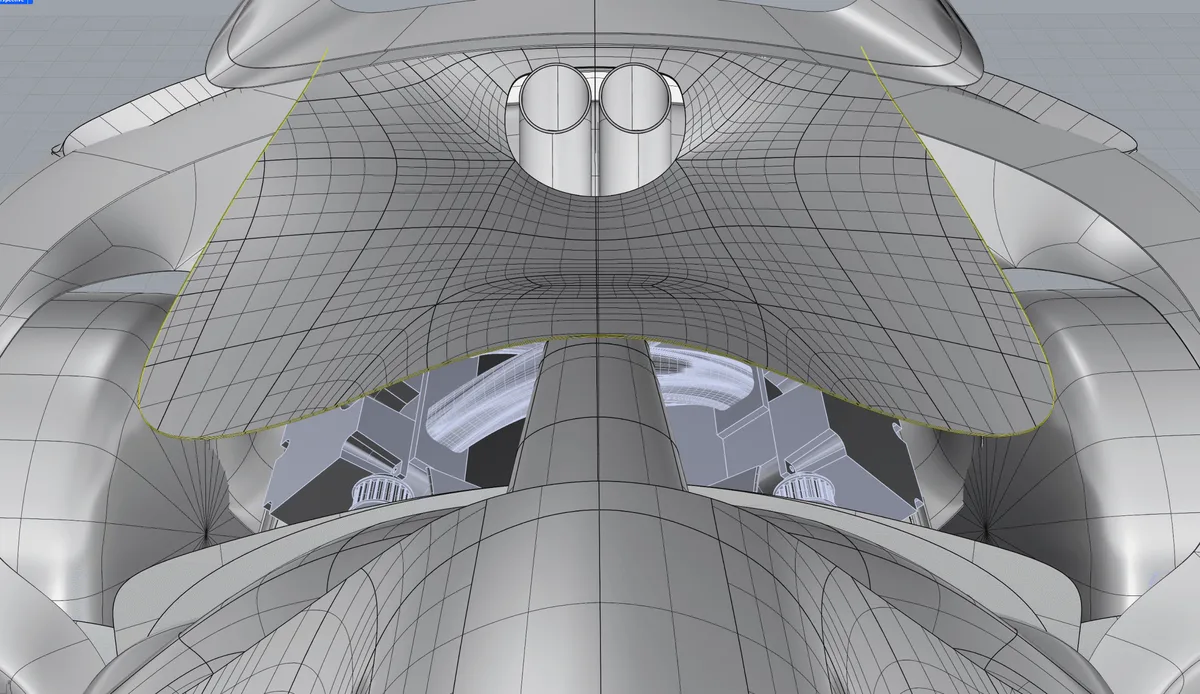
The Gravity Sketch model could go straight to rendering.
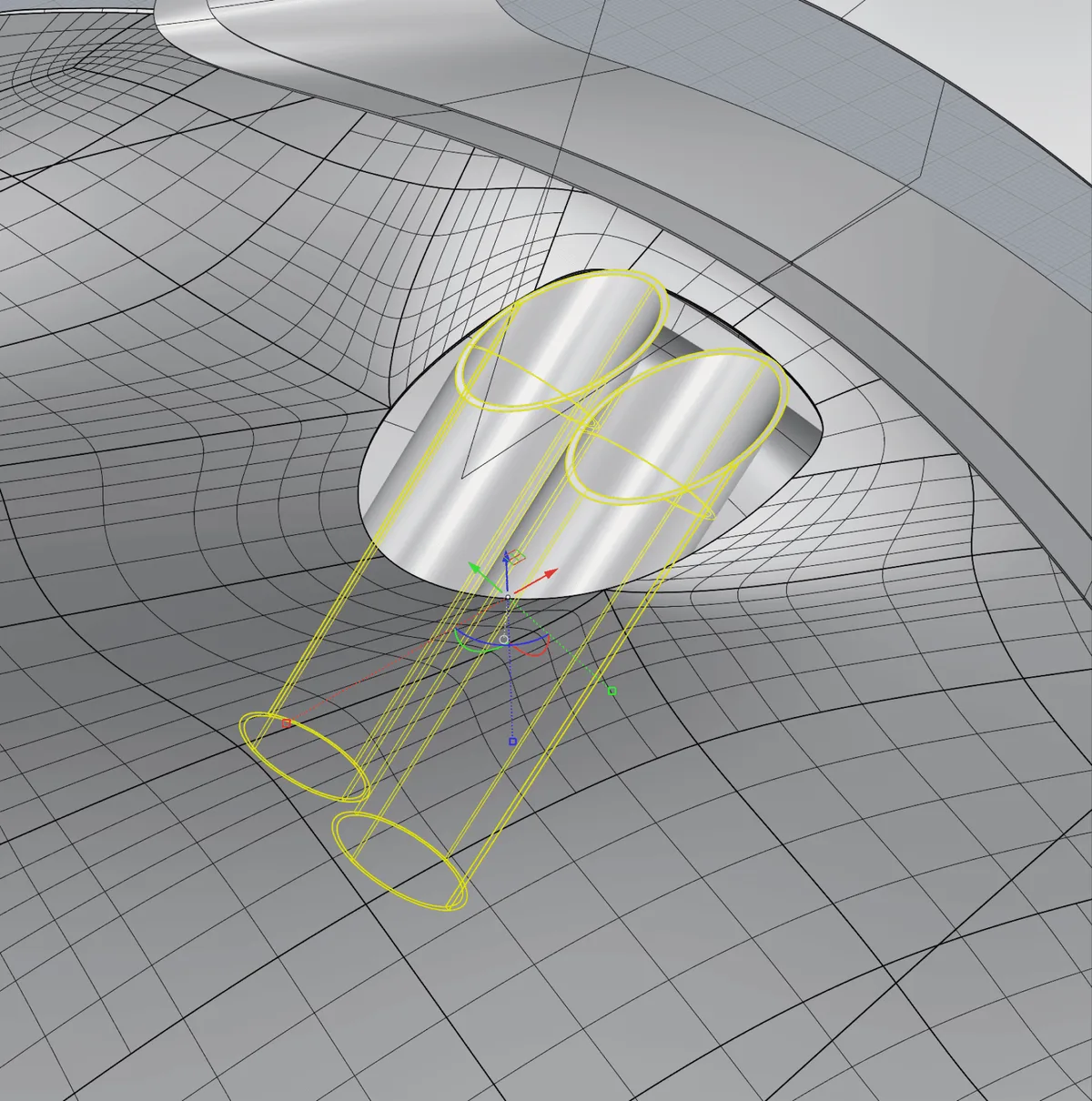
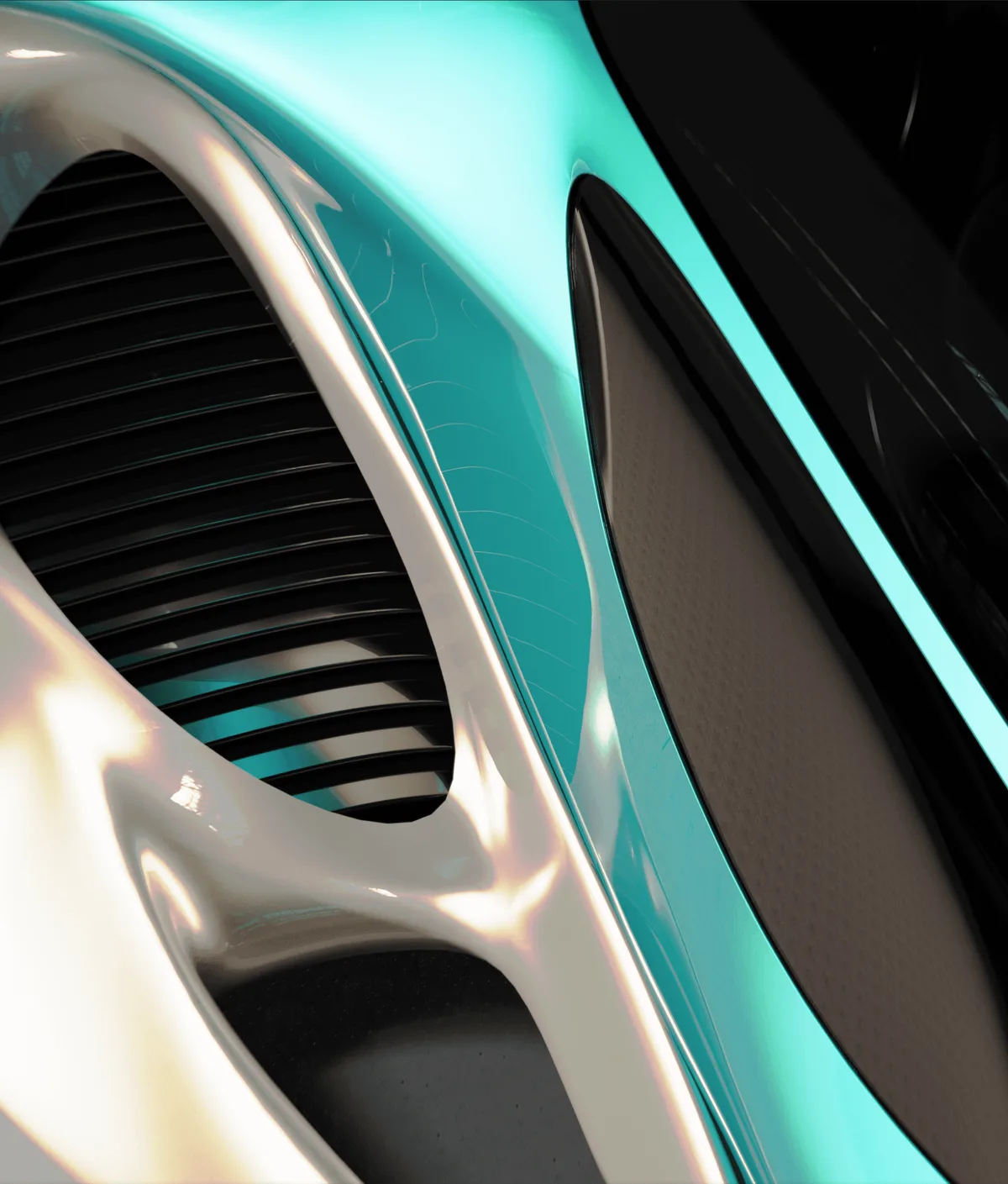
Up close, the VR surfaces carried unwanted creases, and details like the exhaust, vents and suspension needed exact, repeatable shapes.
Bring the model into Rhino for final refinement: remove creases, split and cut the meshes, and model the exhaust, vent pattern, engine and coilovers precisely.
The handoff was heavy: the export arrived as 11,137 SubD objects, enough for Rhino to warn it might become unstable.
Formula f
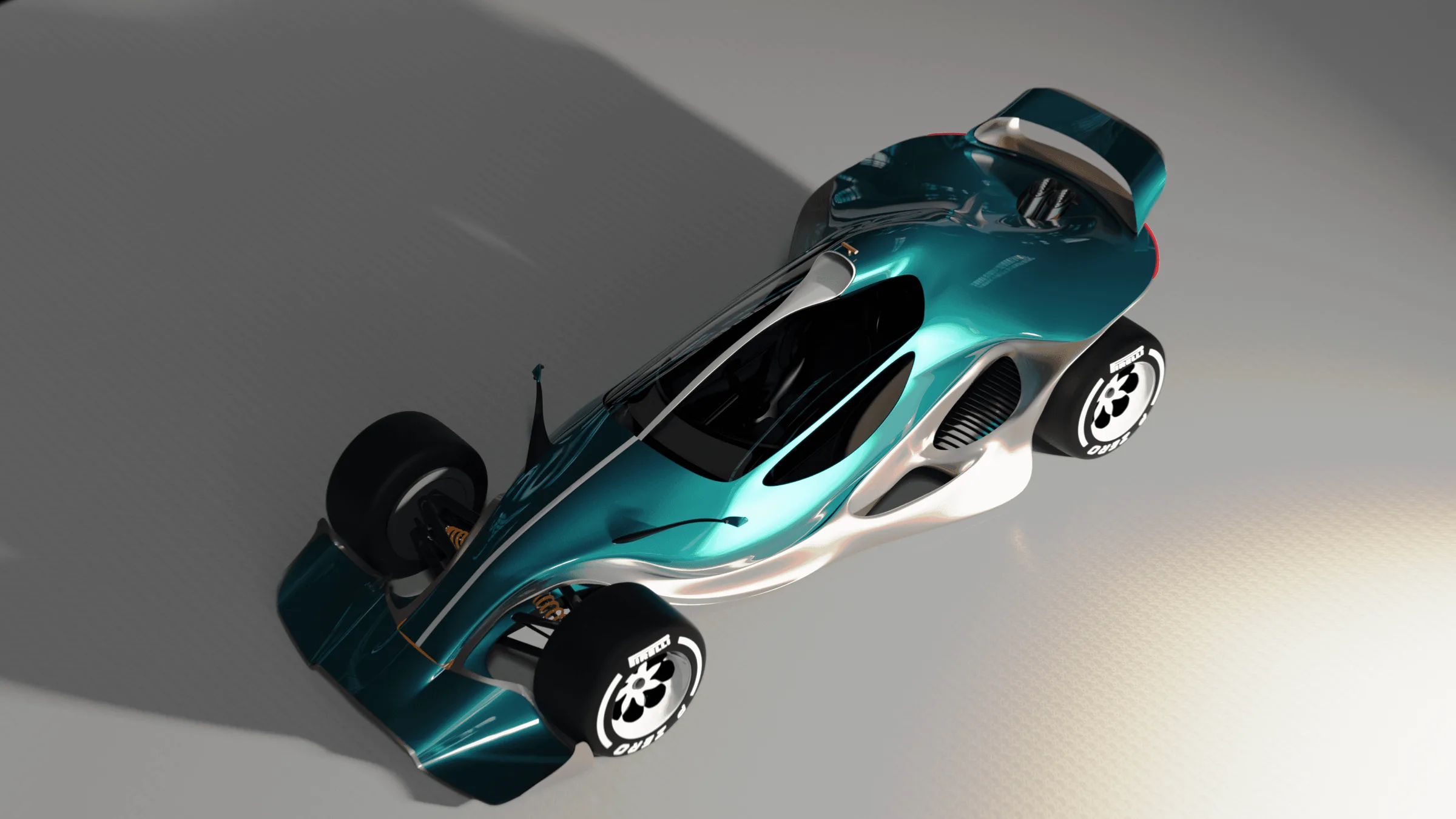
Silhouettes and the full form shaped in 3D with Gravity Sketch.
Seating and visibility set at full scale.
Creases removed; exhaust, vents and suspension modeled exactly.
Finished in Photoshop.
What I'd do next
- [What VR made easier, and what it made harder.]
- [What you'd push next: aero, packaging, a livery?]
- [How you'd use this workflow again.]